
University of Alaska Anchorage
Biology
Department
 Biology
home
Biology
home
Biology
faculty
Undergrad
Program
Graduate Program
My Research
Antarctic
Seals
Steller
Sea Lions
Harbor
Seals
Multibeam Sonar
List
of Publications
Graduate Students
Current
George
Esslinger
Past
Cheryl
Clark
Jill
Prewitt
Julie
Richmond
Danielle
Savarese
Vanessa
vonBiela
&
Faculty Research Fellow, ENRI
Department of
Biological Sciences, CPSB 202C
M.Sc. in Fisheries, 1993
Jennifer
M. Burns
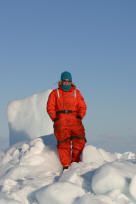
Associate
Professor of Biology
3211 Providence Drive
University of Alaska
Anchorage, AK 99508
jburns@uaa.alaska.edu
Phone:
907-786-1527
Fax: 907-786-4607
B.S. Marine Biology & Zoology, 1990
"Environmental and biological factors that influence harbor
seal haulout behavior in Washington, and their consequences for
the design of population surveys"
Ph.D. in Marine Biology, 1997.
University of Alaska,
Fairbanks
"The development of diving behavior and physiology in
juvenile Weddell seals (Leptonychotes weddellii) in
McMurdo Sound, Antarctica"
Post-Doctoral Research Associate, 1997-2000. University of California, Santa Cruz. Phocid Developmental Physiology
Research Interests
My research focuses on understanding how the age and physiological status of juvenile marine mammals influences their diving and foraging capacities, and on how differences in rates of physiological development impact life history traits. I currently have an active research program focused on understanding whether the rate and extent of neonatal physiological development is closely correlated with the onset of independent foraging. For all marine mammals, the ability to remain submerged for long periods of time is largely dependent on two parameters: the amount of oxygen that can be carried to depth, and the rate at which it is used. However, our research has suggested that juvenile behaviors are constrained as a result of higher oxygen use rates, smaller reserves, and reduced body size, and that these constraints likely impact growth and survival. In my research, I use a wide variety of analytical tools including computerized dive recorders, satellite telemetry and GIS techniques, as well as several more hands-on techniques such as measuring heart rate and respiration patterns, energy use, and animal condition and health status.
Follow the links in the sidebar to find out more about a few of the current projects in my laboratory
I am currently recruiting for 2-3 new graduate students to work on ongoing research projects. If interested, please contact me via email.
MSc/ PhD student(s) wanted for study of Weddell seal physiology. Student will participate in field project focused on understanding overwinter diving and movement patterns of Weddell seals, and the interaction between behavior and physiological condition. One student will focus on physiology, and experience and interest in biochemistry and physiological techniques preferred. A second student will focus on modeling diving behavior, so statistical and mathematical skills preferred.
MSc/PhD student wanted to participate in a study of the role of micronutrients in the development of diving ability in young pinnipeds. Some field work, but mainly the study will focus on laboratory analyses of collected samples. Strong skills in physiology, biochemistry, and molecular techniques preferred.